AR / VR / Connected experiences
Beyond the screen.
Into the useful.
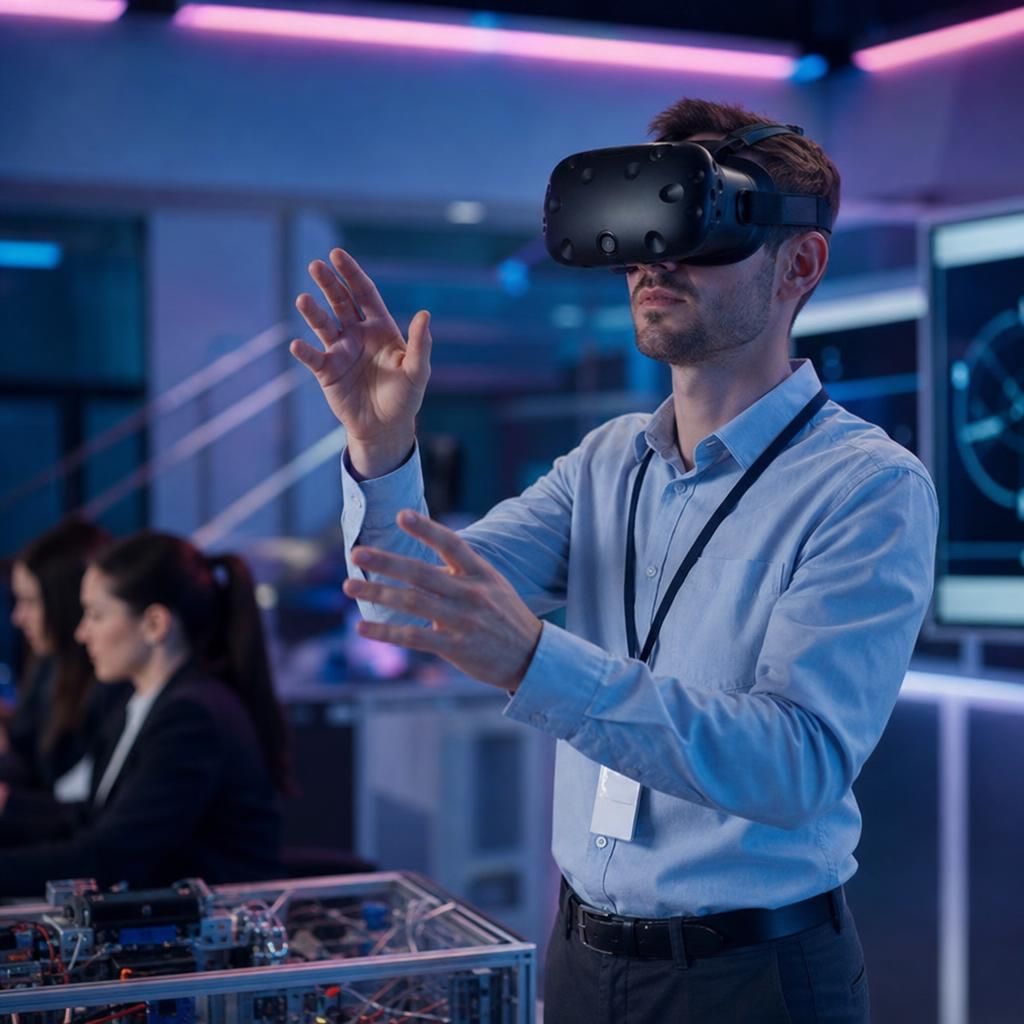
Immersive experiences earn their place when they help somebody do something that a flat screen cannot. We develop AR and VR software, connect it to the right devices and organise the content behind it. From a focused headset application to a repeatable training scenario, we consider the whole experience: what people see, how they interact and what happens when the headset comes off. Start with a purpose. Build the right degree of immersion around it.
Explore the possibilitiesSoftware + devices + content
Considered as one experience.
Immersive Tech / Perspective
Presence is a starting point. Purpose comes first.
A convincing environment can attract attention. A useful experience has to hold up after the novelty has passed. We begin with the task: what somebody should understand, practise, inspect or decide, and why an immersive format could help.
Sometimes the right first step is a short prototype rather than a complete virtual world. Sometimes a browser-based or conventional application is the more appropriate route. We discuss that openly. The aim is not to put every interaction into a headset, but to identify where spatial context, physical movement or controlled repetition adds something meaningful to your project.
Immersive Tech / Capabilities
One experience. Several connected layers.
A headset application does not exist in isolation. It relies on device configuration, content performance, account access and the environment where it will be used. A successful brief considers those layers together, while keeping the scope of each deliverable clear.
Our work can cover application development, integration with third-party immersive devices, training simulations and the pipelines that prepare 3D content for real-time use. You can commission a focused part of that work or a defined combination. We do not manufacture hardware or imply a vendor partnership. Device choice and supplier responsibilities are discussed as project decisions, not hidden assumptions.
Immersive Tech / Interaction
Interaction that makes sense in space.
People bring different levels of confidence to immersive technology. An experience needs to explain where to look, how to act and how to recover when an interaction does not go as expected. Controller input, hand tracking and gaze are design choices, not interchangeable features.
We prototype the important actions early, using the intended hardware wherever possible. That helps expose awkward reach, unclear feedback, text that is difficult to read and actions that require too much precision. Comfort, accessibility and an appropriate alternative route belong in the design conversation from the beginning. No single immersive interface suits every person or every setting.
Immersive Tech / Device layer
The device layer deserves real attention.
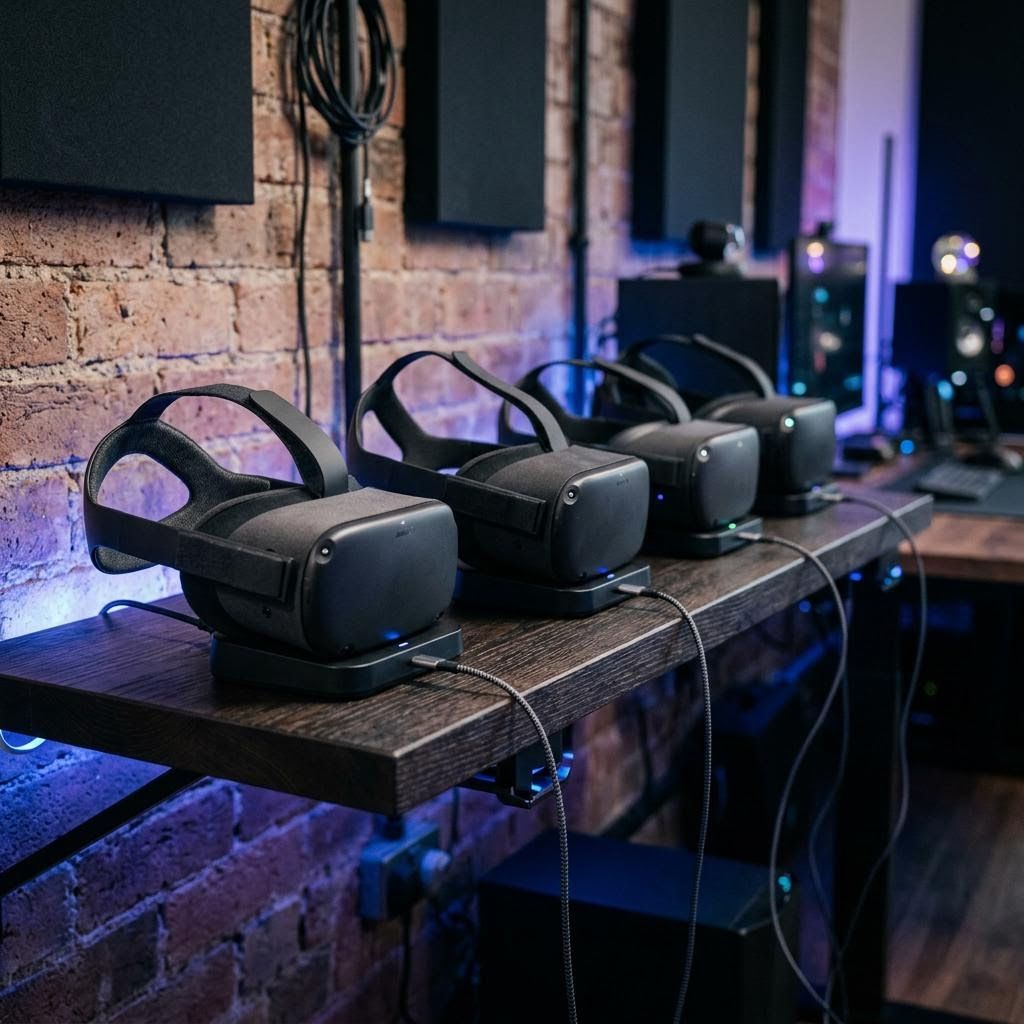
A demonstration on one headset is different from a repeatable deployment. Devices need an owner, an account model, a configuration approach and a way to receive updates. Connectivity, charging, physical setup and supplier restrictions can all shape the software.
We can help configure an agreed device fleet and connect application delivery to the way your organisation operates. Before promising a rollout route, we review the target hardware, operating-system version and available management options. Procurement and warranties remain explicit responsibilities. The goal is a documented setup that your nominated people can understand, not a one-off configuration that nobody knows how to repeat.
Immersive Tech / Content layer
Build a pipeline, not a pile of files.
Detailed source models are rarely ready to place directly into a real-time experience. Geometry, materials, texture sizes and scene structure affect performance, while naming and versioning affect the people maintaining the work. We develop 3D content pipelines that make those decisions repeatable.
The starting point is the source material and your right to use it. We discuss what can be simplified, what must remain accurate and how a changed asset reaches a tested application. Visual realism is one option, not the only measure of quality. A lighter, clearer representation may serve the task better and run more predictably on the intended device.
Immersive Tech / Project route
Find the right first experiment.
Use the project-route selector to bring the main unknown into focus. A training scenario starts with a different question from device fleet configuration, even when both involve the same headset. The location of use can change the brief as much as the visual content.
The suggestions below are preparation prompts, not an automated technical assessment or a quotation. Your selections stay in this page and are not saved. Choose the closest purpose and environment, then use the result to frame a conversation about users, constraints and a proportionate first deliverable. It is fine if some of those details are not yet settled.
Immersive Tech / Delivery
From prototype to something repeatable.
We organise delivery around decisions that can be reviewed. A prototype tests a critical interaction or technical uncertainty. A production build develops an agreed set of features and content. A pilot checks the experience in the intended setting with people authorised to assess it.
Each stage should have a clear output and acceptance criteria. We discuss performance on the target device, how the application starts and exits, the handling of interrupted sessions and what a supervisor needs to know. Timings, fees and dependencies are agreed before work begins. We do not invent usage figures, training improvements or deployment success rates to make the proposal sound more certain.
Immersive Tech / Readiness
Ready to leave the demo room?
The jump from a promising demonstration to everyday use is often operational. Somebody has to manage devices, confirm content rights, help new users and decide when an update is ready. Those responsibilities need to be visible before a wider rollout.
Use the checklist to identify the pieces already in place. It is deliberately short and does not certify security, safety or suitability. If an answer is missing, that is a useful discovery topic rather than a reason to guess. We can help map the remaining work, distinguish software tasks from organisational decisions and agree what needs to be resolved before the next release.
Select what is already known. Nothing is saved or sent.
Immersive Tech / Ownership
Leave with the knowledge, not just the build.
An immersive project should not depend on a single undocumented workstation. Handover can include build instructions, device configuration notes, content conventions and a known-issues record, with code and asset ownership set out in the engagement.
We also discuss what happens after launch. Device software changes, source content evolves and new users need support. Maintenance and update testing are scoped explicitly, including the hardware that must remain available for verification. Our normal contact hours are Monday–Friday, 09:00–18:00 Europe/London, with daylight saving. Any support commitment beyond the agreed arrangement needs a separate conversation; it should never be inferred from an attractive demonstration.
Immersive Tech / Questions
The boundaries make the work stronger.
Immersive software can support training, but it does not automatically validate competence or replace supervised instruction. Your subject-matter experts define the learning purpose, review the material and decide how it fits into wider practice. We develop and test the agreed software.
Likewise, device integration does not mean hardware manufacture, a vendor endorsement or a guarantee that every future headset version will behave identically. We state the tested configuration and discuss the consequences of changes. Clear boundaries let a project focus on what can genuinely be delivered, while leaving professional, procurement and operational decisions with the people authorised to make them.
Do you manufacture or supply headsets?
No hardware manufacture is offered. We develop software and integrate agreed third-party devices. Procurement, warranties and any supplier relationship are clarified before work begins.
Can a simulation replace supervised instruction?
Not by default. Your subject-matter experts determine the learning purpose, assessment criteria and safe use. We develop the agreed experience and test it against those requirements.
Immersive Tech / Next
What would be more useful in three dimensions?
Bring a situation, not a buzzword. Tell us what someone is trying to do, what makes it difficult today and where the experience would be used. If you already have hardware or 3D source material, describe it without sending credentials, confidential files or personal information.
We can then discuss whether a discovery, a targeted prototype or a defined build is the right next move. The first useful outcome is a clearer decision: what to test, what to leave out and what evidence would justify proceeding. For an existing project, our support page provides a separate route for reporting a technical issue and keeping its context together.